cuEvo: Massively Parallel Interaction-Aware Evolutionary Planning on GPUs for Real-Time Urban Driving
Abstract
Real-time trajectory optimization for autonomous driving requires reasoning over non-convex vehicle constraints and interactions with multiple traffic participants, making long-horizon planning computationally demanding. Although population-based evolutionary methods can handle non-smooth objectives without analytical gradients, their large-scale candidate evaluation and irregular operations limit real-time deployment. We present cuEvo, a CUDA-native evolutionary planner that combines interpretable behavior reasoning with massively parallel continuous trajectory optimization. An intention graph and a lane-level Markov decision process generate admissible maneuver tasks, which are optimized concurrently on the GPU. Each candidate represents steering and acceleration profiles using compact Bézier parameterization and is rolled out through a kinematic vehicle model. cuEvo exposes hierarchical parallelism across maneuver tasks, population candidates, trajectory timesteps, and surrounding agents. It further redesigns evolutionary operators through warp-coherent crossover, fused GPU kernels, and parallel population ranking, keeping the complete optimization loop resident on the GPU. On the nuPlan benchmark, cuEvo optimizes a 10s horizon at 0.2s resolution in less than 10ms per planning cycle. It outperforms all evaluated learning-based baselines, while remaining competitive with state-of-the-art model-based planners. These results establish cuEvo as an efficient framework for interpretable, long-horizon, and real-time urban driving.
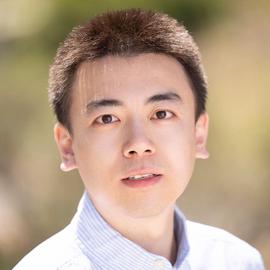
Sen Na
Assistant Professor in ISyE
Sen Na is an Assistant Professor in the School of Industrial and Systems Engineering at Georgia Tech. Prior to joining ISyE, he was a postdoctoral researcher in the statistics department and ICSI at UC Berkeley. His research interests broadly lie in the mathematical foundations of data science, with topics including high-dimensional statistics, graphical models, semiparametric models, optimal control, and large-scale and stochastic nonlinear optimization. He is also interested in applying machine learning methods to problems in biology, neuroscience, and engineering.