Abstract
We present an optimize-then-discretize framework for solving linear-quadratic optimal control problems (OCP) governed by time-inhomogeneous ordinary differential equations (ODEs). Our method employs a modified overlapping Schwarz decomposition based on the Pontryagin Minimum Principle, partitioning the temporal domain into overlapping intervals and independently solving Hamiltonian systems in continuous time. We demonstrate that the convergence is ensured by appropriately updating the boundary conditions of the individual Hamiltonian dynamics. The cornerstone of our analysis is to prove that the exponential decay of sensitivity (EDS) exhibited in discrete-time OCPs carries over to the continuous-time setting. Unlike the discretize-then-optimize approach, our method can flexibly incorporate different numerical integration methods for solving the resulting Hamiltonian two-point boundary-value subproblems, including adaptive-time integrators. A numerical experiment on a linear-quadratic OCP illustrates the practicality of our approach in broad scientific applications.
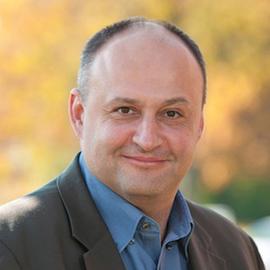
Mihai Anitescu
Professor in Statistics and CAM
Mihai Anitescu is a Professor in the Statistics and CAM departments at the University of Chicago, and is also a senior computational mathematician in the Mathematics and Computer Science Division at Argonne. He works on a variety of topics on control, optimization, and computational statistics.

Sen Na
Assistant Professor in ISyE
Sen Na is an Assistant Professor in the School of Industrial and Systems Engineering at Georgia Tech. Prior to joining ISyE, he was a postdoctoral researcher in the statistics department and ICSI at UC Berkeley. His research interests broadly lie in the mathematical foundations of data science, with topics including high-dimensional statistics, graphical models, semiparametric models, optimal control, and large-scale and stochastic nonlinear optimization. He is also interested in applying machine learning methods to problems in biology, neuroscience, and engineering.