Multiple-Shooting Interior-Point Differential Dynamic Programming for Constrained Nonlinear Optimal Control
Abstract
We propose Multiple-Shooting Interior-Point Differential Dynamic Programming (MS-IPDDP) for finite-horizon constrained nonlinear optimal control with smooth path inequalities and terminal equality constraints. The method lifts intermediate states into the decision variables, enforces the dynamics through defect constraints, and combines this multiple-shooting transcription with a primal-dual interior-point DDP recursion. As a result, the solver can start from dynamically inconsistent state-control guesses and reduce the resulting defects during the solve, rather than requiring a feasible rollout at every iteration. For a fixed barrier parameter and with an exact second-order local model, we show that the unregularized lifted backward pass coincides with the condensed Newton step of the perturbed KKT system for the lifted barrier subproblem. This equivalence identifies the precise Newton content of the method and clarifies how defect lifting changes the admissible iterates while preserving the stagewise structure of the solve. We also present an uncertainty-aware extension based on linearized covariance propagation and first-order Gaussian tightening of selected path constraints. Extensive numerical studies demonstrate the computational efficiency of the proposed MS-IPDDP, its robustness to deterministic initialization, the empirical calibration of the tightened surrogate in the stochastic setting, and viability for repeated solves in nonlinear MPC. The implementation of the proposed method will be made publicly available upon acceptance.
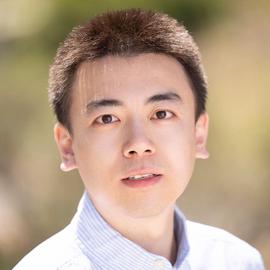
Sen Na
Assistant Professor in ISyE
Sen Na is an Assistant Professor in the School of Industrial and Systems Engineering at Georgia Tech. Prior to joining ISyE, he was a postdoctoral researcher in the statistics department and ICSI at UC Berkeley. His research interests broadly lie in the mathematical foundations of data science, with topics including high-dimensional statistics, graphical models, semiparametric models, optimal control, and large-scale and stochastic nonlinear optimization. He is also interested in applying machine learning methods to problems in biology, neuroscience, and engineering.